Projects
Our projects bring together interdisciplinary teams across multiple countries to develop, test, and improve LiteFarm in real-world farming contexts. From climate adaptation and biodiversity to digital inclusion and open-source innovation, each collaboration helps ensure LiteFarm continues to meet the evolving needs of farmers around the world. Explore our projects below.



Agroecology in Latin America
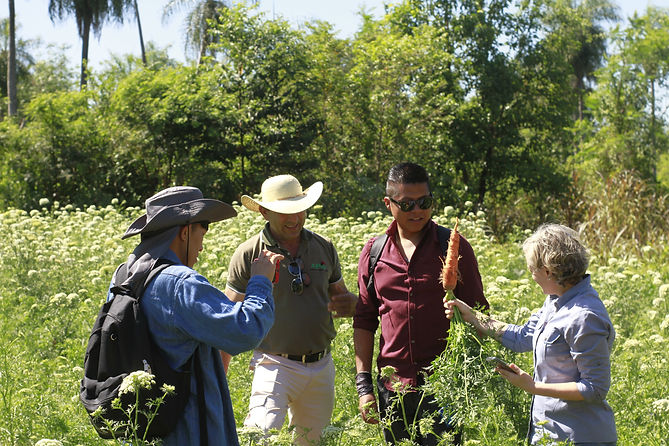
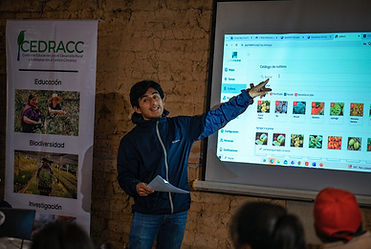
Agroecology is widely practiced in Latin-America, yet it continues to receive limited policy and research support. Agroecology in Latin America: Building Paths is a participatory action research initiative that seeks to strengthen the evidence base for agroecology through collaborative data collection and evaluation. Focusing on 11 social, environmental and economic indicators, the project is helping build a more robust understanding of how agroecological practices contribute to resilient farming systems and rural livelihoods.
Since launching in 2020, the project has brought together a network of 10 organizations across seven Latin American countries, engaging more than 313 farming families at different stages of their agroecological transition. Using LiteFarm alongside SurveyStack, participating farmers collect rigorous, standardized data that is contributing to one of the region's most comprehensive bodies of evidence on agroecological transitions.
Project Steering Committee:
The project has generated valuable evidence to advance agroecological knowledge, inform public policy, and support the development of practical tools and resources for farmers and practitioners. By analyzing data across diverse agroecological contexts, the project helps strengthen decision-making, promote agroecological transitions, and support family farmers in managing their production systems.
Explore more
Agroecology4Climate
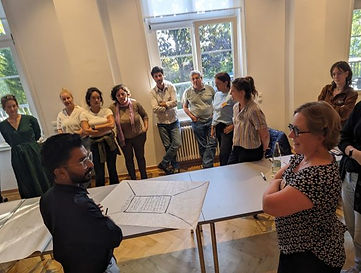
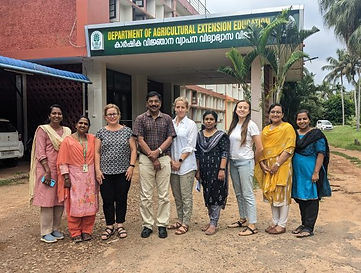
Agroecology for Climate Adaptation and Mitigation (Ag4C), is an international research collaboration exploring how agroecological transitions can help address climate change while strengthening farming communities and ecosystems across Canada, Brazil, Germany, and India. Agroecological transitions are the intentional diversification of farming landscapes, developed in collaboration with farmers, social movements, and local networks to foster dignified livelihoods, conserve biodiversity, and support both climate adaptation and mitigation. The project places particular emphasis on transitions toward diversified perennial farming systems.
Launched in September 2024 with case studies in Brandenburg, Germany, and Kerala, India, Ag4C brings together researchers and community partners to better understand how agroecological transitions unfold in different environmental and social contexts. Over three years, the project will combine soil sampling, farmer interviews, surveys, and cross-case analysis to generate evidence that supports more resilient, equitable, and climate-ready agricultural systems.



Regenerative Climate Resilient Vegetable (RCRV)
The Regenerative Climate Resilient Vegetable (RCRV) Project is a collaborative research initiative led by the Sustainable Agricultural Landscapes Lab at the UBC Centre for Sustainable Food Systems. The project explores how regenerative and organic farming practices can reduce greenhouse gas emissions, increase carbon sequestration, and build resilient, profitable vegetable production systems across diverse Canadian climates.
Working with organic farms across British Columbia, researchers are evaluating practices such as cover cropping, reduced tillage, nutrient management, and organic amendments to better understand their impacts on soil health, crop productivity, farm economics, and climate outcomes. The project combines on-farm trials, soil sampling, and participatory research with farmers to generate practical, evidence-based recommendations for regenerative agriculture.
As part of this collaboration, LiteFarm supports researchers and farmers mapping fields, documenting farm management practices, and recording soil sampling locations. By integrating research data with farm management information, LiteFarm helps streamline data collection and supports long-term monitoring of regenerative farming practices.
Smart Irrigation
The Smart Irrigation project is a collaborative initiative developed with Farming Smarter and Ensemble Scientific to improve water management and support data-informed irrigation decisions in regions where agriculture is highly dependent on irrigation.
The project integrates real-time soil moisture, weather, crop, and soil data to generate irrigation recommendations on when and how much to water. By aligning irrigation scheduling with crop needs and field conditions, the system helps reduce overwatering and underwatering while improving overall water efficiency.
This approach reduces manual monitoring effort, minimizes water waste, and supports more precise irrigation management for healthier crops and more sustainable resource use. The project is currently being piloted on farms in Southern Alberta.
.jpeg)


Connecting Farms to Markets
The Community of Organizations (CoO) is a collaborative initiative that brings together independent open-source projects to build shared, interoperable digital infrastructure for agriculture. Emerging from DWeb Camp 2024, and developed over twelve months of structured collaboration, CoO explores how cooperation between autonomous organizations can enable collective impact without compromising independence.
The initiative responds to long-standing challenges in agricultural systems shaped by extraction and fragmentation, particularly in how digital tools and platforms serve farmers. Built on open standards and shared governance frameworks developed with 11th Hour support, CoO demonstrates an alternative model where coordination is achieved through interoperability rather than consolidation.
The first collaborative pilot, Connecting Farms and Markets, links hundreds of farms across farm management, marketplace, and discovery platforms. It shows how community-stewarded open standards can enable coordination across systems while allowing producers to maintain control over their digital identities and market relationships.
Rather than creating a single centralized platform, CoO functions as a replicable model for federated cooperation in agriculture. It demonstrates how principles from agroecology, open-source development, and the decentralized web can align to support the creation of shared, public-good digital infrastructure at scale.
"Exit to Community" Project
This project explores a set of future pathways for LiteFarm, detailing governance and organizational options for the farm management app as it matures. These pathways explore what governance might look like while safeguarding the technology’s open-source mandate, ensuring financial sustainability, and maintaining our commitment to farmers, external contributors, and institutional adopters that LiteFarm will remain transparent and community-led into the future.


A Unified, Open System for Farm Emissions
An NSERC Alliance Society project bringing together universities, federal scientists, farmer organizations and technology partners to build a unified, open system that lets Canadian farmers measure and benchmark their greenhouse gas emissions using data they already track. It connects Canada's official farm emissions calculator (Holos) with LiteFarm and the Cool Farm Tool through a common data standard, using satellite imagery and machine learning to fill gaps in records. All software is open-source, bilingual and privacy-protected, with 700+ Canadian farms targeted to use the system by project end.
